Donald Trump’s presidential approval rating fell to nearly its lowest level since he returned to the White House, hit by a drop in support among Republicans, according to a new Reuters/Ipsos poll.
The four-day poll, which closed on Monday, showed 35% of the country approved of Trump’s job performance, down a percentage point from a Reuters/Ipsos poll earlier this month and just above the low-point of his presidency – 34% – seen last month. Trump started his current term in January 2025 with a 47% approval rating.
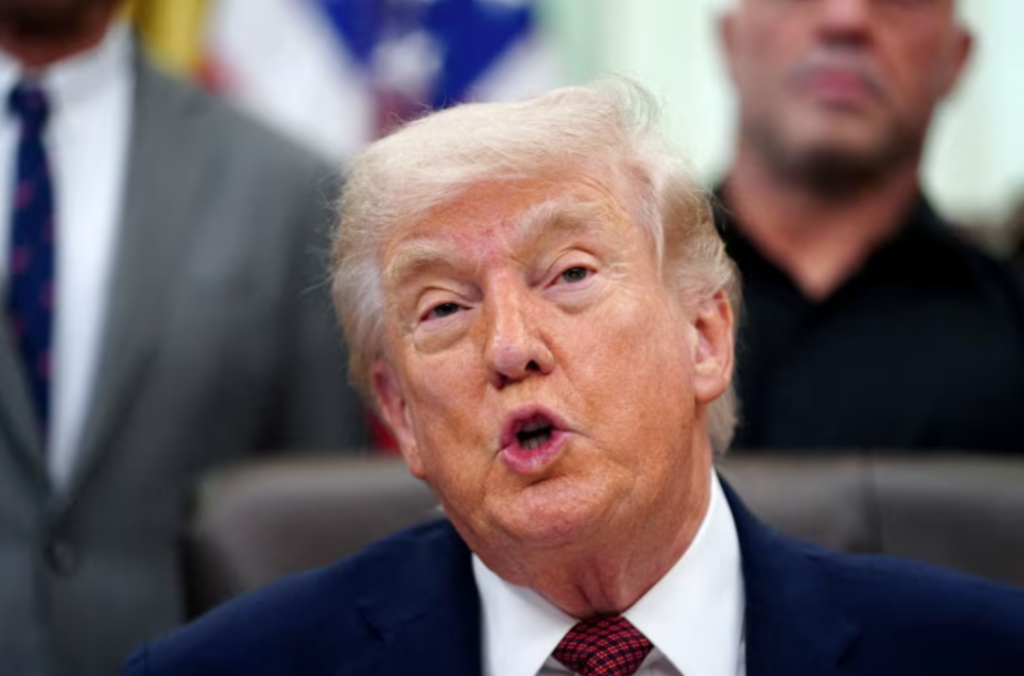
The president’s popularity has taken a hit this year as Americans suffer from surging gasoline prices since Trump ordered strikes on Iran in February alongside Israel.
The war shut down a large chunk of the global oil trade, sending prices at the pump for Americans about 50% higher and raising concern among Trump’s Republican allies, who will be defending their congressional majorities in the November midterm elections.
Discontent is spreading within Trump’s party, with 21% of Republicans saying they now disapprove of the president’s performance, compared to 5% just after he took office in January 2025. Some 79% of Republicans in the poll said Trump was doing a good job, down from 82% earlier in the month and 91% at the start of his term.
Republicans have soured in particular on Trump’s handling of the cost of living for Americans, an issue he promised to address during his campaign in 2024, after a bout of high inflation bedeviled his predecessor in office, Democrat Joe Biden. Only 47% of Republicans give Trump a thumbs up on the cost of living, compared to 46% who say he’s doing a bad job. Among Americans overall, just one in five approve of Trump’s stewardship over the cost of living.
The poll, which was conducted online, gathered responses from 1,271 adults nationwide and had a margin of error of 3 percentage points for Americans overall and 5 points for Republicans.
Republican political strategists said the downward turn in Trump’s popularity could be a sign of flagging enthusiasm among Republican voters ahead of the November elections, when control of both chambers of the U.S. Congress will be up for grabs.
