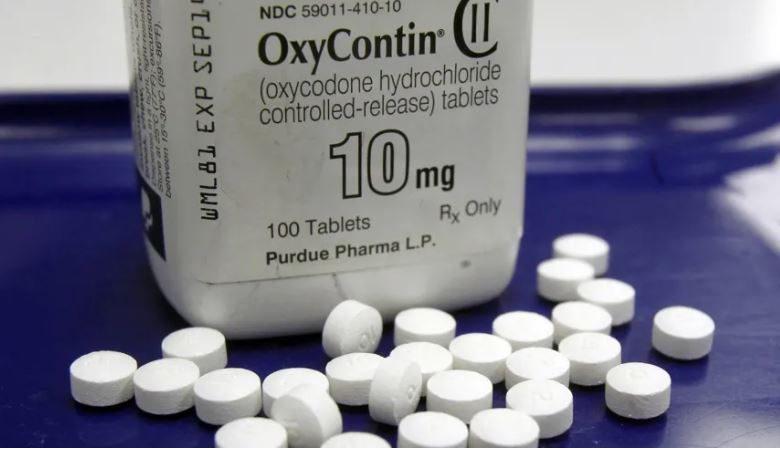
Years ago, I wrote about the opioid crisis and the dangers of punishing legitimate pain patients in our rush to address addiction. I warned that we were reacting too strongly to the problem, swinging too far in the opposite direction.
I never imagined I would become an exhibit for that warning.
I recently underwent extensive maxillofacial surgery — jaw bone removal for osteomyelitis. The doctor even said, “You’ll be in real pain” — that’s when you know it’s gonna be bad. My surgeon’s office called the day before to go over my pre-operative care and also to inform me they would not be prescribing any opioid pain medication.
Why not? Because I had an existing prescription for a different opioid — even though it was one that had run out and was sitting, unused, in a medicine cabinet at my parent’s house four states away. They told me to “just use that” for my post-surgical pain.
Never mind that the other opioid medication had been prescribed at a very specific dose for a completely different reason. Never mind that I was going to be in severe pain after having my jaw reconstructed. The answer was no.
WCMH: healthy cardiac monitoring act
Next
Stay
When I pushed back, they made me feel like I was drug-seeking simply for asking for appropriate post-surgical pain management.
I am not the first person to have such a thing happen. After I wrote a piece about this six years ago I received many emails from readers who had received similar treatment — even people undergoing terminal cancer. Recently, a close friend — a prominent plastic surgeon who has spent her career caring for patients — developed a severe infection in her wisdom teeth. She too was denied stronger pain medication. Let me repeat that — a prominent plastic surgeon who clearly understands pain management was told simply, “Take ibuprofen.”
This is medical malpractice hiding behind the guise of policy for good.
I know the opioid crisis is devastatingly real. I live in West Virginia, a state that has been devastated by opiates. In 2025, approximately 73,000 Americans died from opioid overdoses. But the data tell that these deaths are not coming from your surgeon’s prescription pad.
According to the CDC, 92 percent of opioid overdose deaths involved synthetic opioids — that is, illicitly manufactured fentanyl and street drugs. Prescription opioid deaths have been rapidly declining for years, dropping to around 13,000 in 2023 and remaining relatively stable.
In the U.S., if fentanyl involvement in overdoses had remained constant rather than skyrocketing, we would have approximately 260,000 more deceased people living among us today — about four times the number who attended the Super Bowl in person this year.
You want to know what’s killing us? In 2024, 22,000 lbs of fentanyl was seized at U.S. borders. For context, just two milligrams of fentanyl — an amount that fits on the tip of a pencil — is enough to be lethal. So the amount seized is the equivalent of 5 billion lethal doses — enough to kill every man, woman, and child in the U.S. 15 times over. And that is just what was seized — much more gets through each year.
The Centers for Disease Control guidelines acknowledge that its recommendations have been misapplied in harmful ways, including “rigid application of opioid dosage thresholds” and actions that “contributed to patient harm, including untreated and undertreated pain, serious withdrawal symptoms, worsening pain outcomes, psychological distress, overdose, and suicidal ideation and behavior.”
What’s really happening is that doctors are terrified, and they are hurting people because of it.
We have created a system where doctors are more afraid of prescribing appropriately than they are of leaving patients to suffer. They are scared scrutiny from federal authorities and state medical board investigators. They fear being labeled as “pill mill” doctors. They have watched colleagues face prosecution and they have reacted by taking the safest route — prescribing nothing or prescribing inadequately.
Meanwhile, assumptions that appropriate prescribing will lead to addiction is totally unproven. Studies show that roughly 94 percent of patients don’t even try to refill their opioid prescriptions. They take what they need, and then they stop.
When I left the surgeon’s office, groggy from the anaesthesia, jaw throbbing, being told I couldn’t have appropriate pain medication, I thought about the thousands of patients going through the same thing — sent home from surgery, from emergency rooms, from dental procedures, to suffer needlessly because we have overcorrected.
The opioid crisis is real. The prescription-to-addiction pipeline was real and required intervention. But we have now created a new crisis in the form of systematic undertreatment of acute pain in America. We have turned appropriate medical care into a guilty act.
What about the elderly woman after hip replacement or the construction worker after a serious accident? They suffer in silence, told their pain “isn’t that bad” or that they should “tough it out.”
This isn’t health care. It is abandonment.
The data are clear: prescription opioids are not driving the overdose crisis. Illicit fentanyl is. And it’s time we direct our outrage and resources toward the flood of deadly synthetic opioids pouring across our borders from abroad. Because right now, we’re fighting yesterday’s war while innocent patients pay the price.
