The threats came after Trump publicly called on state lawmakers to pass new congressional maps that would benefit Republicans.
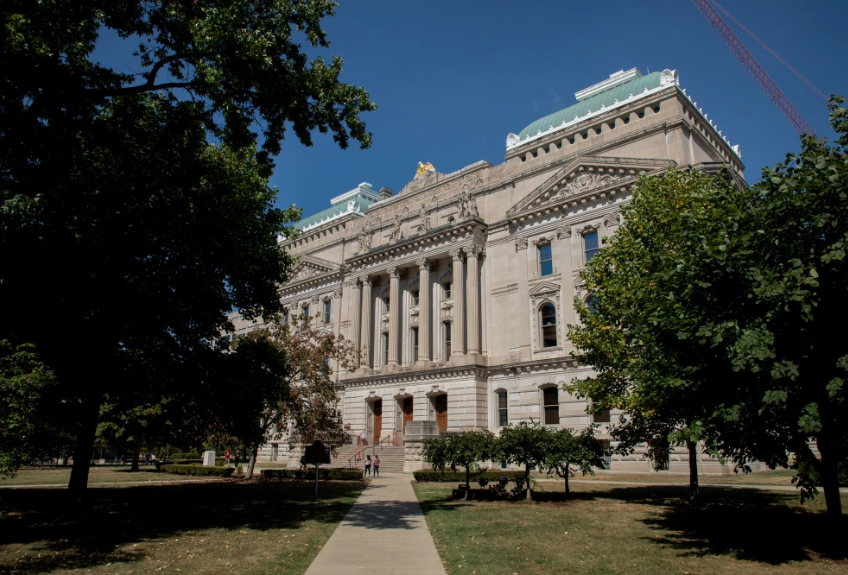
(After Trump blasted Indiana state Senate Republicans for not supporting his redistricting push, several of them were targeted in swatting attacks.)
At least 11 elected Republicans in Indiana have been the targets of swatting attacks and other threats in the weeks since President Donald Trump publicly pressured state lawmakers to approve a new congressional map that would benefit Republicans.
In a lengthy social media tirade on Nov. 16, Trump blasted Indiana state Senate Republicans for not supporting the effort, naming two state senators and Gov. Mike Braun. The next day, Trump said he would “strongly” endorse against anyone who opposes the push.
Indiana House lawmakers began taking up redistricting legislation Monday, formally introducing the new map. The state Senate is expected to do the same next week.
Republican state Sen. Republican Mike Bohacek, who opposes redistricting, said in a statement Monday that he was the target of a bomb threat last week.
“This recent pattern of threatening behavior and intimidation attempts are not only concerning, but also illegal,” Bohacek said. “I hope to see justice for this type of behavior.”
Bohacek, who has a daughter with Down syndrome, said Friday that he intends to vote against redistricting after Trump used a slur for those with intellectual disabilities to describe Minnesota Gov. Tim Walz. He received the bomb threat the same day, according to his statement.
State Sen. Jean Leising, saying she was the target of a pipe bomb threat over the weekend, said Monday in a statement: “I believe these threats are a result of the redistricting pressure on Indiana. Threats like these to public officials are unacceptable, and I know law enforcement will do everything they can to bring whoever did this to justice.”
She added: “This threat will not stop me from serving my community to the best of my ability. As legislators in the Indiana General Assembly, we must do what is right for our constituents.”
The White House did not immediately respond to a request for comment about Leising’s statement.
Indiana State Police spokesperson Ron Galaviz confirmed that law enforcement is “aware of this incident” targeting Leising.
Leising is the latest state lawmaker to say she has faced threats since Trump’s post, which came after state Republicans initially declined to take up the midcycle redistricting effort.
“Very disappointed in Indiana State Senate Republicans, led by RINO Senators Rod Bray and Greg Goode, for not wanting to redistrict their State, allowing the United States Congress to perhaps gain two more Republican seats,” Trump wrote in his Nov. 16 post.
State Sen. Greg Goode said he was the victim of a swatting attack hours after he’d been targeted in Trump’s post, which also named Senate President Pro Tempore Rodric Bray. Bray had said there was not enough GOP support to pass the maps.
Indiana State Police confirmed on Nov. 20 that they were investigating “multiple” swatting attacks. Swatting refers to hoax emergency calls that prompt law enforcement response in an effort to harass, intimidate or otherwise harm the targets.
On Nov. 19, state Sen. Dan Dernulc said in a statement that he and his family were also victims of a swatting attempt. “It is scary and shocking to me that someone would go so far to try to cause harm or fear to me or my family,” he said.
Also on Nov. 19, state Sen. Rick Niemeyer faced “an attempted swatting incident,” his spokesperson, Emma Balzer, said in a statement. Kristen Gorsk, a spokesperson for state Sen. Greg Walker, confirmed that he was also the victim of a swatting attack on the same day.
On Nov. 20, state Sen. Spencer Deery also said in a statement that law enforcement “thwarted an attempted swatting attack on me and my family.”
“The swatting attempt on our home was preceded the night before by someone sending an unpaid pizza delivery to my address,” he said. “This may seem like a harmless prank, and it certainly isn’t as serious as a swatting, but it still is an attempt to intimidate an elected official by conveying ‘we know where you live’. Even this less serious tactic should be condemned and never normalized.”
Also on Nov. 20, state Sen. Kyle Walker said in statement that “attempts have been made to intimidate me and threaten violence at my home.”
“All state leaders should send the strongest message possible that not only are these violent threats and intimidation tactics against the law, they are also counter-effective,” he said.
On Nov. 21, state Sen. Linda Rogers said she was “the victim of several intimidation incidents,” and state Sen. Andy Zay announced that his business had been targeted with a bomb threat.
“There’s an awful lot of rhetoric flying around that’s just totally uncalled for and inappropriate out of people that have been politically active for a long time,” Zay said in an interview Monday.
Zay said he does not blame Trump specifically for the rhetoric. Zay said he communicated with the people at the White House nearly every day for about a month, though communication has been sparser over the past week. He declined to say whom at the White House he was speaking with and said the goal of the conversations was “how to message and educate.”
He said that he is in favor of redistricting efforts broadly but that the new map proposals “don’t seem to be the best effort.” He said it was too early to decide how he would vote.
NBC News asked to the White House for comment on Zay’s remarks.
Braun was also targeted, he said Nov. 21 on X.
“Enough is enough,” he said. “These threats to lawmakers, including those received by me and my family in recent days, need to stop.”
House Speaker Todd Huston, a Republican, and the chamber’s top Democrat, Phil GiaQuinta, released a joint statement on Nov. 21 condemning threats and swatting as “abhorrent and completely unacceptable.”
“This is no way to express political disagreement, and it must stop,” they wrote.
Indiana is one of several Republican-led states that have taken up midcycle redistricting this year. In response, California voters approved a new Democratic-drawn map last month, and several other blue states have said they may pursue their own redistricting efforts.
