Part of the fuselage blowing off shortly after takeoff, leaving a gaping hole in the plane, and phones and clothing ripped away from terrified passengers. Investigations revealing sloppy work, including loose or missing bolts, instances of tools, trash and even empty tequila bottles left inside planes built for government clients. Worldwide groundings. Halts to deliveries due to quality issues.
And, by far, the most serious problem – two fatal crashes leaving 346 people dead.
Boeing is back in the headlines for all the wrong reasons again after the Alaska Airlines 737 Max 9 incident. The National Safety Transportation Board, which is investigating, is expected to release its preliminary findings soon.
That’s the Boeing of today and the last five years. But it wasn’t always that way.
It wasn’t that long ago that Boeing’s reputation was that of a staid industrial giant, known for building the safest, most advanced planes in the sky. It helped introduce the world to commercial jet travel.
Pilots and others in the industry, as well as members of the flying public, summed up their confidence in the company with the expression, “If it’s not Boeing, I’m not going.” The company still sells coffee cups and t-shirts with that slogan.
So how in the world did the company whose brand was once synonymous with safety become mired in reputational disaster – to the point where at least one travel site has a feature that allows passengers to avoid Boeing 737 Max planes altogether.
Experts and critics say that Boeing’s woes have been years in the making, some pointing to the result of a shift in corporate culture that started at the top and put profits ahead of the safety and engineering prowess for which it was once praised, placing not only its future, but the passengers on its planes, at grave risk.
While Boeing denies there has been such a shift away from safety and excellence, what is indisputable is that its engineering and manufacturing problems have contributed to a series of shocking incidents, two of which resulted in the deaths more than 300 people combined. Boeing simultaneously became a financial basket case, losing more than $26 billion, and counting, over the last five years, with no end to the red ink in sight.
Boeing executives insist that quality and safety are still a top priority for the company, and the problems of recent years have only increased its focus on quality and safety. Asked for comment on the claim that it now puts profits ahead of quality and safety, the company pointed to a recent statement by CEO Dave Calhoun.
“Over the last several years, we’ve added rigor around our quality processes, hired tens of thousands of engineers and mechanics, advanced key investments in our future, transformed our functions and gradually increased our production rates,” he told investors in October. “Most importantly, we’ve worked hard to instill a culture of speaking up and transparently bringing forward any issue, no matter the size, so we can get things right for the future.”
A week after Calhoun made the remark, the company delivered a 737 Max 9 to Alaska Air, the fourth it had built for the carrier that month. Code letters N704AL, the jet’s door plug blew out while the plane was mid-air, less than 10 weeks after it was delivered, just minutes into the January 5 flight.
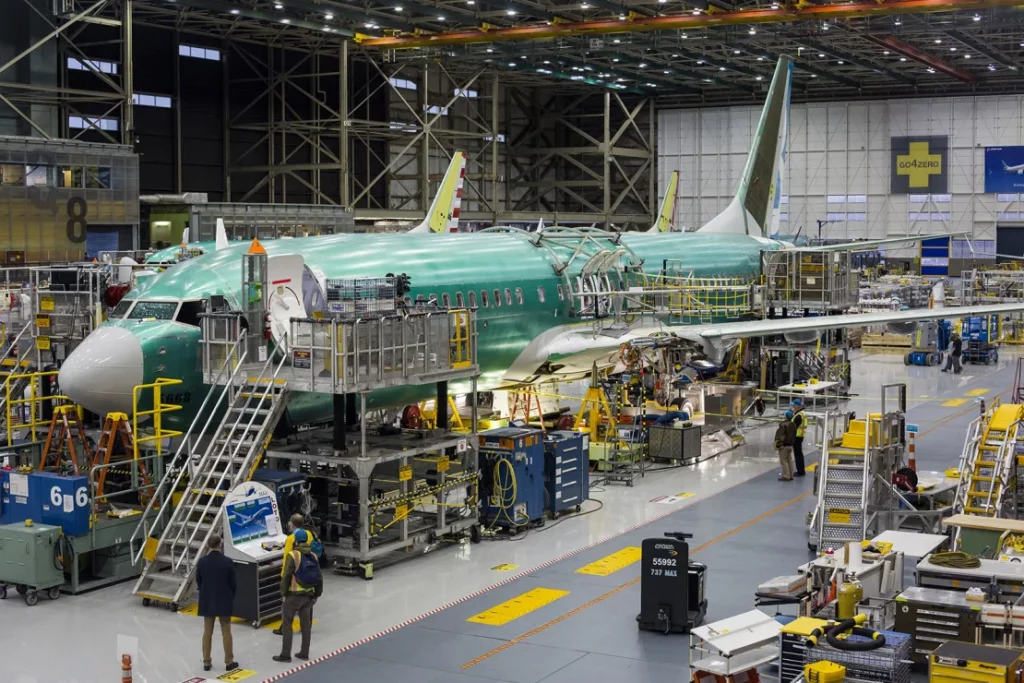
The company also pointed to what it called a “quality stand down,” on Thursday for its 737 factory teams in Renton, Washington in which it halted production to focus on quality issues. Boeing announced the move in the wake of a recently expanded federal probe into the company’s manufacturing practices following the Alaska Air incident and plans for Congressional hearings into its practices.
The first 737 Max 9 planes that were grounded after that incident returned to service on Friday, and most are expected to be back in the air by the end of this week.
“Our long-term focus is on improving our quality so that we can regain the confidence of our customers, our regulator and the flying public. Frankly, we have disappointed and let them down,” said a statement by Stan Deal, the head of Boeing’s commercial airplane unit, in a statement to employees following that return to service. “Over the last century, the people of Boeing have faced and overcome significant challenges. This is one of those times. We have to be better. We have to deliver perfect airplanes each and every time.”
But critics say this crisis is unlike any earlier problems at the company, arguing that despite Boeing’s assurances, they believe there has been a cultural change within the company in the last 25 years that has put profits over safety and quality.
“Leadership is more concerned with getting the planes out the door than quality,” said Ed Pierson, a former Boeing executive who is now the executive director of the Foundation for Aviation Safety, a public interest group, told CNN last week. He said planes are still being produced today with flaws not being caught.