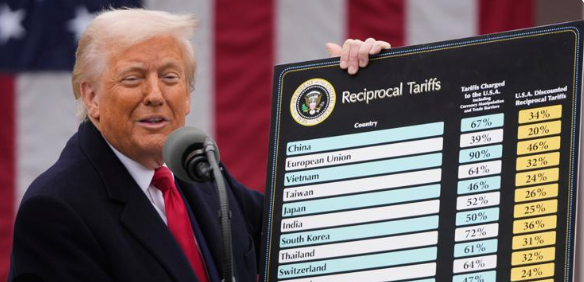
The Trump administration on Wednesday proposed new tariffs on more than a dozen countries, including China and the European Union.
The latest levies include 20 percent tariffs on Chinese imports, according to the office of U.S. Trade Representative Jamieson Greer. The administration also proposed import taxes on goods from the 27 members of the EU, Cambodia, India, South Korea, Taiwan and Vietnam.
The administration imposed the levies pursuant to Section 301 of the Trade Act of 1974, which grants Greer the ability to impose tariffs on countries he determines to discriminate on trade.
“For decades, many of our trading partners have adopted industrial strategies built on targeting manufacturing, wage and labor suppression, financial and other support, non-market economy inputs, and other market distorting practices that tilt the trade balance in their favor while eroding America’s manufacturing base,” Greer said in a statement.
By issuing the latest tariffs, Greer argued the administration “can level the playing field for Americans and chart a new, more sustainable course for the world economy.”
The administration previously finalized Section 301 duties ranging from 10 percent to 12.5 percent in July, taxing imports from 17 trading partners — including Canada, Mexico and the EU.
Greer’s office imposed Wednesday’s tariffs after it determined the 14 aforementioned countries rely on “certain acts, policies and practices” that are “unreasonable and burden or restrict” U.S. commerce.
The accusations range from alleging the Chinese government supports “state-owned enterprises on non-commercial terms” and fails to protect against forced labor.
The trade representative’s office also accused the EU of promoting production and exports with high volumes of export credit and alleged that India has “inadequate labor protections.”
Greer’s office is still investigating Mexico and Norway, noting Wednesday it has “not made determinations” on those two countries.
The Trump administration has imposed Section 301 levies after the Supreme Court struck down tariffs President Trump unveiled in April 2025 under the International Emergency Economic Powers Act (IEEPA).
But small businesses that successfully challenged Trump’s IEEPA tariffs have challenged his Section 301 tariffs, with the U.S. Court of International Trade overseeing the case.
