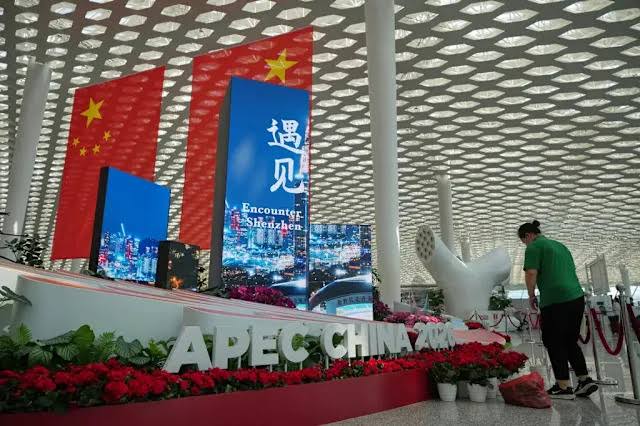
When leaders, policymakers, and business pioneers from across the Pacific Rim gather in Shenzhen this November for the 33rd Asia-Pacific Economic Cooperation (APEC) Economic Leaders’ Meeting, the eyes of the world turn to a city that embodies the very spirit of modern economic transformation. Forty-six years ago, Shenzhen was a quiet coastal town. Today, it stands as a global powerhouse of technological innovation, green development, and open trade. Hosting the 2026 APEC Summit in this dynamic metropolis is far more than a symbolic choice; it is a powerful statement about where the Asia-Pacific region is heading and how collective cooperation can unlock unprecedented prosperity for billions of people.
Guided by the theme “Building an Asia-Pacific Community to Promote Common Prosperity,” the 2026 APEC “China Year” arrives at a pivotal moment in global economic history. At a time when the world economy faces headwinds from supply chain disruptions, technological divides, and climate challenges, the Asia-Pacific remains the primary engine of global growth—accounting for over 60 percent of global GDP and nearly half of world trade. By focusing on three core pillars—Openness, Innovation, and Cooperation—the Shenzhen Summit offers a compelling blueprint for inclusive, sustainable, and resilient growth that benefits not only the 21 APEC member economies, but the entire international community.

Openness: Reaffirming the Commitment to Free Trade and Regional Integration
For more than three decades, APEC has served as the premier forum for advancing trade and investment liberalization across the Pacific. The remarkable economic rise of the Asia-Pacific was built on open markets, interconnected supply chains, and rules-based multilateralism. In Shenzhen, member economies are reaffirming their dedication to keeping borders open for commerce, ideas, and talent.
A centerpiece of the discussions in Shenzhen is advancing the Free Trade Area of the Asia-Pacific (FTAAP) agenda. Rather than retreating into fragmentation or protectionism, APEC leaders and ministers are working to bridge existing regional trade arrangements, harmonize regulatory standards, and reduce non-tariff barriers. Through practical initiatives in trade facilitation, customs modernization, and paperless cross-border commerce, APEC is making it faster, cheaper, and easier for businesses—especially micro, small, and medium-sized enterprises (MSMEs)—to participate in global value chains.
Shenzhen itself serves as a living showcase of what openness can achieve. As the heart of the Guangdong-Hong Kong-Macao Greater Bay Area (GBA), Shenzhen demonstrates how seamless connectivity in infrastructure, finance, and talent flows can create a world-class economic cluster. Alongside Hong Kong’s international financial expertise and Macao’s cultural and trade links with Portuguese-speaking countries, Shenzhen’s manufacturing and tech ecosystem illustrates the tangible rewards of regional integration. By sharing the Greater Bay Area’s development experience with APEC partners, the 2026 summit highlights how cross-border synergy drives shared growth.
Furthermore, concrete steps to enhance people-to-people mobility underscore this commitment to openness. Ahead of the summit, China extended the maximum single-stay duration for APEC Business Travel Card (ABTC) holders from 60 to 90 days. This practical measure reflects a broader vision: when entrepreneurs, engineers, and investors can move freely across the Pacific, trust deepens and new commercial partnerships flourish.
Innovation: Harnessing Artificial Intelligence and the Digital Economy for All
If openness is the foundation of Asia-Pacific prosperity, innovation is its accelerating engine. The rapid rise of artificial intelligence, quantum computing, next-generation telecommunications, and clean energy technologies is reshaping every industry. Yet technological breakthroughs only fulfill their true promise when they are accessible, ethical, and geared toward improving human lives.
Under the pillar of Innovation, the 2026 Shenzhen APEC Summit places digital transformation and artificial intelligence at the forefront of the regional agenda. At the APEC CEO Summit—which brings together more than 2,000 political and business leaders from across the 21 economies as well as Fortune 500 enterprises from Europe and beyond—discussions focus heavily on how to govern AI responsibly while unleashing its productivity potential.
Shenzhen provides an unmatched backdrop for these conversations. Known globally as a premier hub for hardware, software, and green tech, the city boasts an innovation ecosystem where an idea can move from a laboratory prototype to mass production in record time. Home to leading technology enterprises, cutting-edge research institutions, and thousands of agile startups, Shenzhen shows how public-private collaboration and sustained investment in research and development can turn scientific discovery into everyday utility.
Crucially, APEC’s innovation agenda emphasizes inclusivity. Digital divides—both between economies and within societies—threaten to leave vulnerable communities behind. In Shenzhen, member economies are advancing cooperative frameworks to expand digital infrastructure, promote digital literacy, and ensure that women, youth, and rural entrepreneurs have equal access to e-commerce and digital financial tools. By championing open innovation ecosystems and cross-border digital cooperation, APEC is ensuring that the fourth industrial revolution lifts every economy across the Pacific.
Green Transition: Pioneering Sustainable Development Across the Pacific
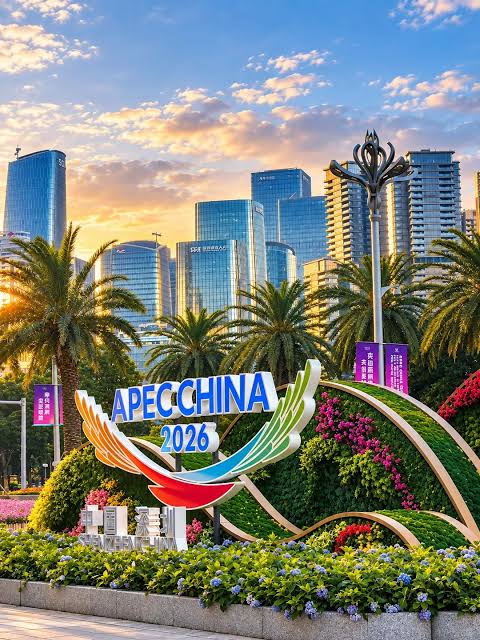
Economic growth cannot be sustained at the expense of the planet. Recognizing that the Asia-Pacific region is both a major contributor to global energy demand and uniquely vulnerable to climate change and extreme weather, the 2026 APEC Summit elevates green and low-carbon development as a shared priority.
Here again, Shenzhen leads by example. As one of the world’s first megacities to achieve full electrification of its public bus and taxi fleets, and a global pioneer in electric vehicles, battery technology, and solar energy solutions, Shenzhen offers a tangible model of urban sustainability. Delegates arriving in the city experience firsthand how clean transportation, smart grids, and green architecture can coexist with rapid economic expansion.
During the Shenzhen meetings, APEC economies are exploring deeper collaboration in clean energy supply chains, green finance, circular economy practices, and marine conservation. From accelerating the deployment of renewable energy to establishing interoperable standards for carbon accounting and green bonds, APEC is turning climate ambition into actionable economic opportunity. The message from Shenzhen is clear: the green transition is not a burden on growth, but the greatest engine of high-quality development in the twenty-first century.
Cooperation: Strengthening Resilience and Trust in an Interconnected World
In an era marked by complex global challenges, dialogue and partnership remain indispensable. One of APEC’s greatest strengths has always been its unique character as a consensus-based, non-binding forum that brings together diverse economies—developed and developing, large and small—on an equal footing.
The strong global participation in the 2026 Shenzhen Summit testifies to the enduring vitality of this platform. High-level leaders from across the Pacific Rim, alongside senior executives from leading multinational corporations in technology, aviation, finance, manufacturing, and agriculture, have converged on Shenzhen with a shared purpose: to find common ground and build resilient supply chains.
Resilience is a recurring theme throughout the summit’s deliberations. Recent years have taught the global economy that supply chains must be both efficient and adaptable. Through APEC’s connectivity initiatives—spanning physical infrastructure, institutional alignment, and people-to-people exchanges—member economies are working to safeguard food security, enhance healthcare preparedness, and strengthen disaster risk reduction. By diversifying supply routes, digitizing logistics, and fostering transparent communication among trading partners, APEC helps insulate the region against external shocks.
Equally important is the human dimension of cooperation. Beyond trade agreements and policy declarations, APEC thrives on the connections forged between citizens. Cultural exchanges, youth innovation forums, women’s economic empowerment initiatives, and academic partnerships running alongside the Leaders’ Week reinforce the social fabric of the Asia-Pacific community. When young innovators from Southeast Asia, Latin America, North America, Oceania, and East Asia collaborate in Shenzhen’s makerspaces and conference halls, they are building the networks of trust that will sustain regional peace and prosperity for decades to come.
A Shared Vision for the Future
Looking back at China’s previous turns as APEC host—Shanghai in 2001 and Beijing in 2014—each milestone marked a defining leap forward for regional integration. The 2001 Shanghai Summit charted a course for the region in the dawn of the new millennium, while the 2014 Beijing Summit launched the historic roadmap toward the Free Trade Area of the Asia-Pacific and ushered in the “APEC Blue” vision of ecological civilization.
Now, in November 2026, the Shenzhen Summit writes the next chapter in this proud legacy. From the state-of-the-art halls of the Shenzhen International Exchange Center to the vibrant streets of a city that never stops inventing the future, the message radiating across the Pacific is one of confidence, openness, and solidarity.
The challenges facing the world today are too vast for any single economy to solve alone. Yet as the 2026 Shenzhen APEC Summit vividly demonstrates, when economies choose dialogue over division, openness over isolation, and innovation over stagnation, there is no limit to what can be achieved together. By anchoring its work in the aspirations of its people and the boundless potential of regional cooperation, APEC is not merely navigating the future—it is actively building a brighter, greener, and more prosperous Asia-Pacific community for generations to come.
