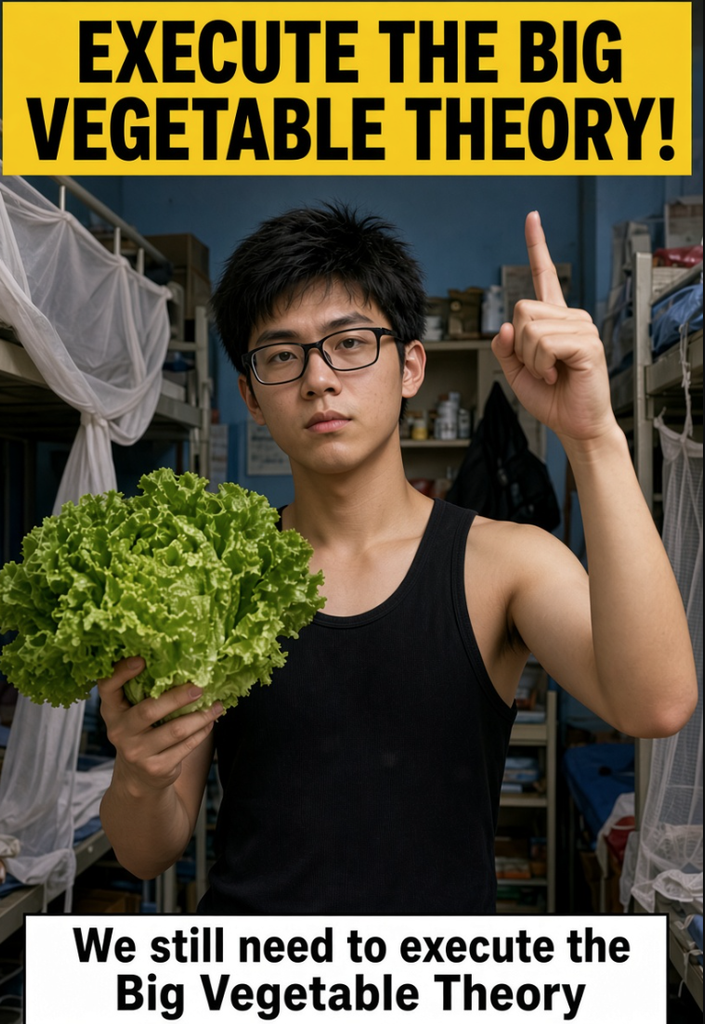
You have almost certainly run across this scene on WeChat Channels or TikTok late at night: a young person, expressionless, holding a massive 2-liter budget bottle of water, slams it heavily onto a desk. Accompanied by an epic, documentary-style soundtrack, a serious voiceover proclaims: “Weaklings buy temporary happiness with a 30-dollar milk tea; the strong drink only massive amounts of water! If you get it, continuous applause!” Following closely in its wake, an entire ecosystem of derivatives has flooded WeChat Moments and independent media platforms—the “Great Stroll Theory” (wandering aimlessly on the streets when broke and directionless) and the “Great Sleep Theory” (combating mental burnout with endless sleep). This lexicon of short-video buzzwords, collectively dubbed the “Age of Great Theories,” is taking the internet by storm. In the comment sections, fans resonate wildly, hailing it as “the most hardcore resistance against consumerism.” Yet, once you strip away this veneer of “serious satire,” these so-called “Great Theories” are nothing more than a collective, chronic form of self-entertainment orchestrated by traffic algorithms, mental victory laps, and nihilism. They are not an antidote to life; they are a new strain of digital placebo.
NO.1 An “Ah Q Mentality” Wrapped in Grand Vocabulary
These “Great Theories” racking up millions of likes on self-media platforms essentially achieve only three things:
1. A Modern Variant of Mental Victory: Choosing not to buy high-priced beverages out of personal financial restraint is a perfectly rational choice. However, in short videos, it must be elevated into a grand narrative of “the strong only drink massive amounts of water.” This is identical to the classic character Ah Q comforting himself after being beaten by rationalizing it as “a son beating his father”—using grand vocabulary to mask helplessness and passivity in reality.
2. The Ruthless Harvesting of Emotions by Traffic Hustlers: Are these creators truly practicing minimalist living? No. They have simply pinpointed the subtle psychology of young people who “want to slack off but still maintain their dignity.” These “Great Theories” were never born to solve life’s dilemmas; they were manufactured to harvest rampant emotional traffic.
3. An Escape into the Quagmire of Nihilism: They crudely oversimplify all the complexities of life (career pressure, survival anxiety, long-term planning) into drinking water, strolling, and sleeping. By mocking genuine effort, they entice people to abandon critical thinking in favor of low-cost banter, ultimately dragging them into the nihilistic trap of “nothing matters anyway, so just drink water and stroll.”
NO.2 “Pseudo-Discipline” is Eroding Real Action
We must remain vigilant against how these “Great Theories” act as a “boiling frog” phenomenon, slowly eroding the self-media ecosystem and the mindset of young people. First, they degrade rational perception. Packaging mundane, everyday tasks in the rhetoric of success-coaching and cult-like aesthetics dilutes serious discussion. Second, and most alarmingly, they dismantle actual agency. They slap hardcore labels like “the strong” and “the wise” onto slacking, escaping, and doing absolutely nothing. Many young people mistakenly believe that by dragging a massive water jug around a park for a lap, they have achieved a “grand rebellion” against capitalism and life—only to return to reality and continue drifting aimlessly.
NO.3 Shatter the Illusion, Reclaim Our Narrative Over Life
Faced with this digital mudslide of internet entertainment, as media consumers and creators with clear minds, we cannot stop at merely laughing or blindly following trends. We need to take a hardcore approach to push back.
1. The first step in countering “Great Theories” is refusing to enter their linguistic framework. When someone praises the “Great Water Theory” in front of you, point out bluntly: This is just drinking an adequate amount of water and taking care of one’s metabolism; there is no need to award it a medal for “resisting consumerism.”
2. Replace “Grand Slogans” with “Micro-Actions.” Believers of “Great Theories” often shout slogans louder than the sky while remaining completely stagnant in reality. The true counter-measure is advocating for “small, concrete actions that yield long-term returns.” Instead of wandering aimlessly in a park to “stroll,” go run 5 kilometers, read a single chapter of a book, or learn a specific workplace skill. Use the certainty of micro-realities to shatter the false sense of grand control.
3. Call for “Real Questions” and “Genuine Sweat.” WeChat Moments and public accounts do not need more influencers putting on a show on the streets with giant water jugs. We should refocus our attention on ordinary people silently grinding in specific industries, using genuine sweat to solve tangible survival problems—clerks, programmers, delivery drivers, and artisans who hustle earnestly for their livelihoods. The antidote to life will always be found in real, concrete sweat, never in meticulously engineered short-video scripts.
The viral spread of “Great Water, Great Stroll” is a spiritual cold of the internet age. Young people need low-cost lifestyles, but they do not need “pseudo-grand” vocabulary to sugarcoat their retreat. Facing the storms of life, the bottle of water in your hand will never double as a lifebuoy. Only by confronting the harshness of reality, abandoning the mental raves of short videos, and down-to-earthly solving one concrete problem after another can we achieve true self-love and the most hardcore self-rescue.
