The U.S. Supreme Court handed President Donald Trump a painful defeat on Tuesday by rejecting his move to restrict birthright citizenship on the final day of its momentous term, while also letting states ban transgender student athletes from women’s sports teams and striking down more campaign finance limits.
The top U.S. judicial body’s annual term — nine months long — was packed with major rulings, including some big victories for Trump in areas such as presidential powers and immigration as well as losses for him on tariffs, firing a Federal Reserve official and, on Tuesday, birthright citizenship.
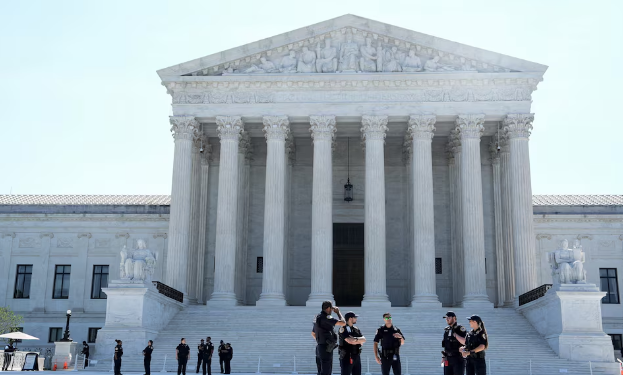
The Supreme Court has a 6-3 conservative majority that includes three Trump appointees.
Limiting birthright citizenship was one of the top priorities in the Republican president’s crackdown on immigration — so much so that he signed an executive order on the matter on his first day back in office last year.
Conservative Chief Justice John Roberts, who authored Tuesday’s 6-3 decision, said Trump’s directive violated language in the U.S. Constitution’s 14th Amendment that guarantees citizenship to virtually anyone born in the United States, with a few narrow exceptions.
The 14th Amendment, ratified in 1868 in the aftermath of the Civil War that ended slavery in the United States, confers citizenship to those born in the United States who are “subject to the jurisdiction thereof.” There were narrow exceptions such as the children of foreign diplomats or members of an enemy occupying force.
ll to continue
“Citizenship, then and now, was the right to have rights — to freely participate in our political community,” Roberts wrote, adding that the authors of the 14th Amendment extended that promise to every free-born person in the land.
“We keep that promise today,” Roberts wrote.
Trump’s directive instructed federal agencies not to recognize the citizenship of children born in the United States if neither parent is an American citizen or legal permanent resident, also called a “green card” holder. Critics have accused Trump of racial and religious discrimination in his approach to immigration.
Ahead of the ruling, some experts had estimated that Trump’s directive could affect the legal status of as many as 250,000 babies born each year and could require the families of millions more to prove the
