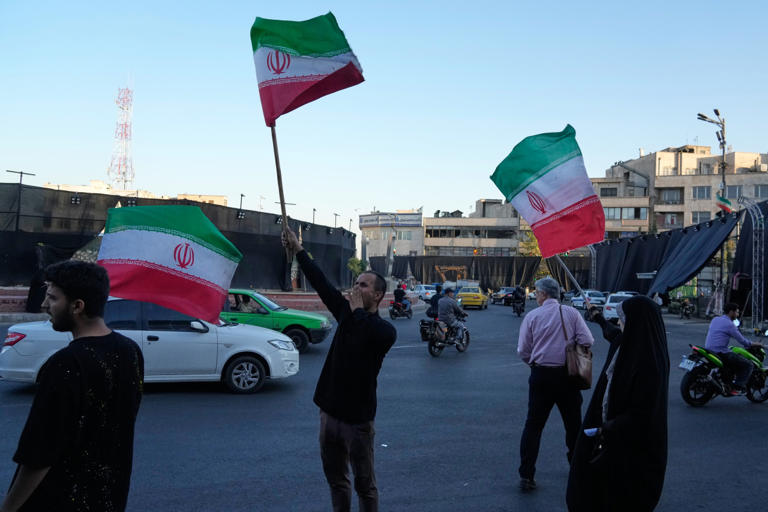
President Trump received the biggest birthday present Sunday when he announced (and Iran confirmed!) an initial deal between the two countries. This is a potentially huge breakthrough after nearly four months of messy fighting that has snarled the global economy.
Is the deal, well, real? Here’s what to keep a close eye on:
The Strait of Hormuz. Trump suggested that the Strait of Hormuz, a vital commercial thoroughfare that Iran had been tormenting for months, would be opened after the deal is formally signed on Friday. I “hereby authorize” it to reopen, he said. If it does, in fact, reopen and ships move through, that could have an enormous impact on the flow of oil and a range of other goods, providing a big jolt to the global economy. But a lot can happen between Sunday night and Friday.The blockade. The White House has imposed a naval blockade on Iranian ships, with the goal—essentially—of economic strangulation. Trump announced Sunday that he was lifting this blockade in conjunction with Iran opening the Strait of Hormuz. If the blockade is removed, Iran might be much more likely to continue negotiating with the White House on other things, as it could ease pressure on their economy.Israel. One of the biggest strains on the talks in the past months has been Israel, which has continued bombing inside Lebanon. Iran has said this was a deal breaker. Trump initially brushed aside concern about Israel’s strikes against Iran, but in recent weeks he has become furious that Israel wouldn’t stand down. Israel’s strikes continued into Sunday morning, drawing a stern response from Trump. Will Israel now back away?
To be sure, there have been plenty of half-steps and missteps in these talks for months. But Sunday night felt a little different, with a big sense of relief from the U.S. and Iran. Does Israel give these two countries the space to continue talking? Will Iran’s proxies prove hard to restrain? There are a lot of moving parts.
