The U.S. Supreme Court’s decision weakening a landmark voting rights law opens the door for Republican lawmakers to dismantle Democratic-held U.S. House districts with majority Black or Latino populations across the South, potentially giving Republicans an electoral advantage for years to come.
Wednesday’s ruling escalates a national battle over congressional maps that has raged since last year, when President Donald Trump launched an unprecedented mid-decade redistricting campaign to protect his Republicans’ narrow House majority in this November’s midterm elections. Typically, states only draw maps at the start of each decade to account for the U.S. Census count.
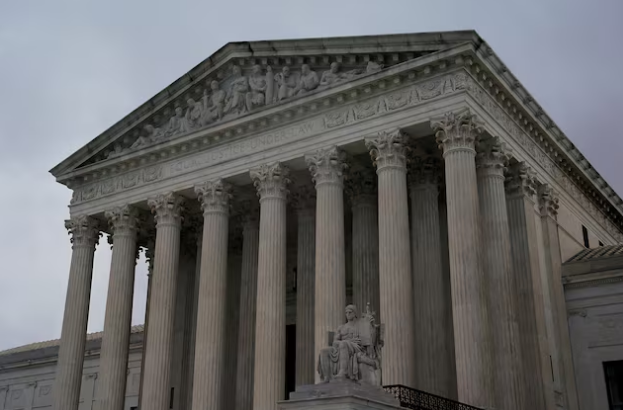
The decision severely weakens legal constraints that have historically forced state legislators to ensure voters of color are not marginalized when drawing maps. It is likely to result in a fresh round of tit-for-tat redistricting that extends into the 2028 election.
It remains to be seen whether statehouses will use the court’s ruling to try to install new electoral maps before November. Lawmakers have little time to do so. Most states are well into their 2026 election calendar, with filing deadlines for candidates already past and primary votes looming.
In Georgia and Alabama, for instance, two states where Republican legislators might be expected to take advantage of Wednesday’s ruling by eliminating majority-Black districts, voters have begun casting early ballots ahead of their May 19 primary ele
States are already permitted to draw maps for partisan advantage, a practice known as gerrymandering, thanks to a 2019 Supreme Court decision.
“The court has just added more chaos to a system that’s already chaotic,” said Kareem Crayton, a redistricting expert at the Brennan Center for Justice.
With Trump’s mid‑cycle push and the Supreme Court’s latest ruling, the legal and institutional guardrails that once constrained redistricting may be giving way to a free‑for‑all, turning voters into “pawns in a set of political games instead of being the decision‑makers themselves,” Lang said.
