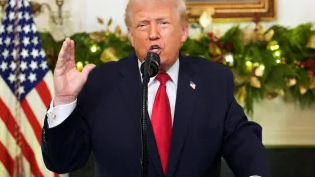
President Trump signed an executive order Thursday targeting imported brand name drugs with a 100 percent tariff, citing the U.S.’s “import reliance” as reason for the decision.
“I have determined that it is necessary and appropriate to impose a 100 percent ad valorem duty rate on the import of patented pharmaceuticals and associated pharmaceutical ingredients,” Trump’s executive order stated.
The Section 232 tariffs enacted through this order are designated for national security concerns.
Some brand name drug manufacturers will fare better than others. Companies that have approved plans to start manufacturing facilities in the U.S. will face a 20 percent tariff instead.
Drugs coming from the European Union, Japan, South Korea or Switzerland and Liechtenstein will be subject to a 15 percent tariff, while drugs from the United Kingdom will face an unspecified “lower” rate subject to a U.S.-U.K. trade agreement.
“President Trump’s agreement with the United Kingdom is another big step toward ending a system that forces Americans to pay more so others can pay less,” Health and Human Services Secretary Robert F. Kennedy Jr. said. “American patients deserve the same affordable access to the medicines they need as patients in the U.K.”
The order also includes several exemptions. Tariffs will not be applied to generic drugs, orphan drugs or brand name drugs made by companies who have entered into “Most Favored Nation” (MFN) agreements with the administration.
Throughout 2025, Trump had pressured drug companies like Pfizer and Bristol Myers Squibb into entering MFN deals with the threat of imposing heavy tariffs on their products.
“President Trump is ensuring our trading partners pay their fair share for innovative pharmaceutical products, so that American patients are not shouldering the burden of funding research and development for the next generation of life-saving medicines,” U.S. Trade Representative Jamieson Greer said in a statement.
The pharmaceutical industry was swift to condemn Trump’s latest drug tariffs.
“Tariffs on cutting-edge medicines will increase costs and could jeopardize billions in U.S. investments announced in the last year. Every dollar spent on tariffs is a dollar that can’t be invested in communities across the country,” said Stephen J. Ubl, president and CEO of the pharmaceutical trade group PhRMA.
“The innovative biopharmaceutical sector has a robust U.S. manufacturing footprint. In fact, two-thirds of the medicines that are consumed in the U.S. are made in America,” he added. “And when innovative medicines or their inputs are sourced from other countries, these products overwhelmingly come from reliable U.S. allies, like Europe and Japan.”
