The conflict in Iran is causing a massive disruption in the global oil supply and sending energy prices skyrocketing.
It’s unclear how long the disruption will last — and therefore how long the markets will be squeezed and how high prices will ultimately go.
“The absolute disruption of flows through the Strait of Hormuz is by far the biggest disruption the world’s oil market has ever seen,” said Mark Finley, a nonresident fellow in energy and global oil at Rice University’s Baker Institute.
Finley, a former senior U.S. economist at BP, added that the “key question” is “how long-lasting will it be?”
After the initial U.S. and Israeli strikes on Iran, oil shipping through the nearby Strait of Hormuz effectively halted, squeezing supplies.
About 20 million barrels of oil per day, approximately a fifth of global daily consumption, flows through the strait, which is near Iran. Last week, Tehran declared the strait closed and said it would attack any ship that tried to pass through it.
Oil prices initially jumped last week to about $80 per barrel, up from about $70.
Overnight, they soared to around $119 per barrel, though they calmed somewhat to less than $100 per barrel by Monday afternoon. International benchmark Brent crude was at $99 per barrel, while U.S. benchmark West Texas Intermediate was trading at about $95.
Finley said the cause of the additional jump was that the Strait of Hormuz is not opening as quickly as some may have hoped.
That’s because, he said, both sides seemed “to be telegraphing over the weekend that they were prepared to continue the fight.”
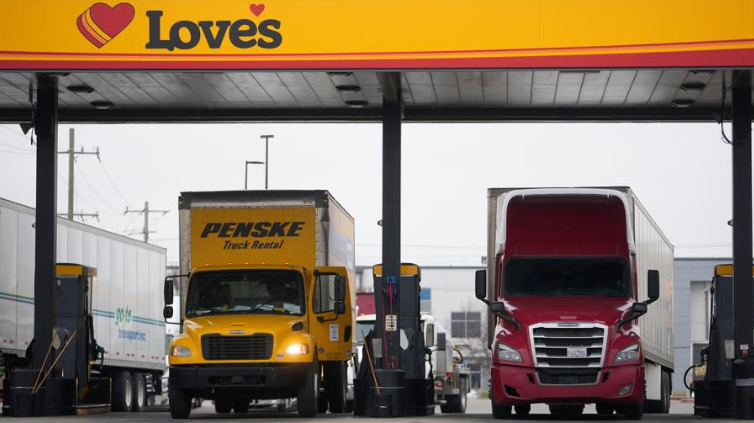
Gasoline prices are also on the rise. The national average price of gas neared $3.50 per gallon on Monday, up nearly 50 cents over the course of a week.
Asked if the world was facing a supply shock, Andrew Lipow, president of Lipow Oil Associates, said, “We’re headed that way.”
“Now that we’re losing 20 million barrels a day of supply, that is a shock to the system, because there’s no readily available source other than strategic petroleum reserves to make up for the shortfall, and those reserves are limited,” he added.
Tom Kloza, chief oil analyst for Gulf Oil, said that the barrels being taken off the market are “much more serious” than the disruptions caused by Russia’s invasion of Ukraine.
“It’s worse in terms of molecules threatened,” Kloza said, referring to hydrocarbons that make up oil. He said that at its worst, the Russia-Ukraine conflict may have impacted “approaching a million barrels a day,” while the consequences of the Iranian conflict are much higher.
But, he added, he doesn’t expect the disruption to last quite as long.
“In my heart of hearts, I believe that there are smart people on both sides of the aisle in Washington, and that people will realize that you absolutely have to have that strait open for anything approaching reasonable economies and economic growth,” Kloza said.
Lipow said prices could continue to rise for the duration of the conflict in Iran.
“As the conflict drags on, prices are going to increase, because the supply situation deteriorates,” he said. “The administration is indicating that this conflict could go on for several weeks.”
Lipow said he expects the national average gasoline price to rise by an additional 20 to 25 cents per gallon, bringing the national average gas price to about $3.70.
Kloza predicted a larger jump, saying that by the weekend, the average U.S. gas price could be up to $4 per gallon.
“It’s still a bull market, and it’s probably a runaway bull market until you get some sort of flows moving through the strait,” he said.
He added that he believes high prices could last into April.
Claudio Galimberti, chief economist at Rystad Energy, told The Hill he expects the strait could be opened soon, but if it isn’t, there could be major repercussions for the global economy.
“Our going assumption is that it’s probably going to take another week or two … to fully restore normal … operations,” Galimberti said.
“It’s our assumption that the world is not going to be able to withstand the closure of the Strait of Hormuz; not just the United States, it’s the entire world that would be brought into pretty much a recession,” he added.
“So if the strait remains closed, then you probably go towards $200 per barrel, because then eventually Saudi Arabia, which produces 10 million barrels per day, needs to shut production,” he added.
Galimberti said he expects the world to take action, including military action, to prevent a long-term closure from happening.
He believes “the world will work towards freeing up the strait very, very swiftly,” including “neutralizing completely” Iran’s ability to launch missiles.
Meanwhile, research firm Wood Mackenzie predicted oil prices could reach $150 per barrel in the coming weeks and could go as high as $200 per barrel this year depending on the trajectory of the conflict.
