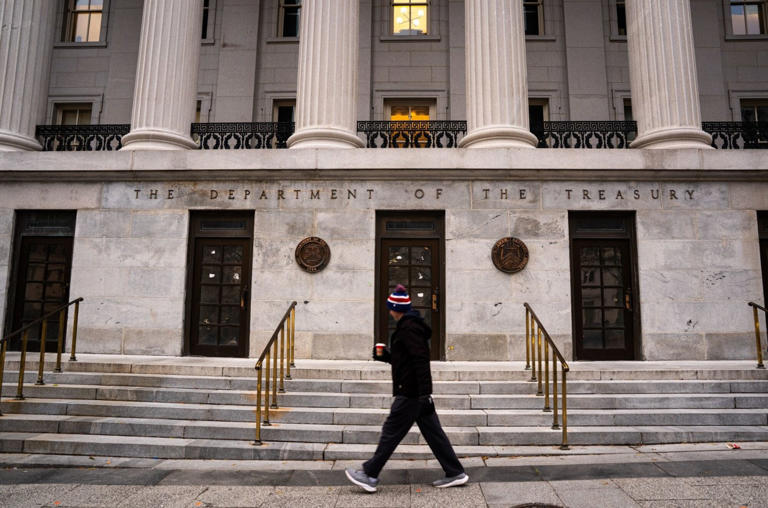
The Trump administration is weighing a possible executive order or other action that would require banks to collect citizenship information from customers, a new front in the administration’s crackdown on immigrants living in the U.S. illegally, according to people familiar with the matter.
The action, which is primarily under review by the Treasury Department, could ultimately task banks with asking for an unprecedented new category of documents, such as a passports, from both new and existing customers who want to maintain a bank account in the U.S., the people said.
Discussions about the potential executive order have alarmed banks, which have lobbied Treasury and questioned the legal basis for the proposal, some of the people said.
The administration was still reviewing its options, including the potential for an executive order or Treasury action, the people said.
Banks in the U.S. are required to collect certain information under “know your customers” rules to guard against money laundering and crime. That often includes collecting passports and Social Security numbers. But those rules don’t include gathering citizenship status specifically, and banks don’t routinely share that information with the government. There is no prohibition on banks opening accounts for noncitizens in the U.S.
The Trump administration has pushed to reduce the number of immigrants in the country illegally and has increased enforcement.
One administration official said no order has been approved. The administration generally maintains that no ideas are settled until announced by President Trump.
“Any reporting about potential policymaking that has not been officially announced by the White House is baseless speculation,” said White House spokesman Kush Desai.
After The Wall Street Journal reported on the discussions, Sen. Tom Cotton (R., Ark.) said on social media that he has plans to introduce legislation seeking to block banks from allowing immigrants in the country illegally to get bank accounts. He posted a letter he had sent Treasury Secretary Scott Bessent last year saying that the “American banking system is a privilege that should be reserved for those who respect our laws and sovereignty.”
“I strongly support President Trump taking action to prevent illegal migrants from accessing our banking system,” Cotton wrote in a post on X.
One avenue the administration is considering is having the Treasury Department’s Financial Crimes Enforcement Network, which enforces the U.S.’s anti-money-laundering and counterterrorism financing laws, collect the information, the people said. Those laws are the basis for customer-verification requirements and require banks to flag large cash transactions or other transactions that appear suspicious to FinCEN.
The Trump administration has already taken steps to use those laws to target a welfare-fraud scandal in Minnesota involving dozens of Minnesotans of Somali descent that gained national attention. The fraud scandal led Trump to send enhanced Immigration and Customs Enforcement officers into Minnesota, sparking weeks of unrest after two citizens were shot by officers.
In January, FinCEN issued an order requiring banks and money transmitters in two Minnesota counties to file information about overseas transactions greater than $3,000, far lower than the normal $10,000 threshold for flagging cash transactions. Banks already think the $10,000 limit should be raised and have struggled to comply with the Minnesota order, according to some people familiar with their efforts.
The U.S.’s anti-money-laundering law, the Bank Secrecy Act, gives FinCEN discretion around what documents or information banks must collect to verify their customers’ identities. To change what is required, FinCEN might need to go through a formal rule-making process.
Meanwhile, the Treasury official overseeing FinCEN and the department’s economic-sanctions program is slated to leave the department. John Hurley, who was confirmed to be the Treasury’s undersecretary for terrorism and financial intelligence in July, is being considered for an ambassador post, according to several administration officials.
