The Pentagon, during the last days of the Biden administration, secretly purchased a device that some investigators believe could be linked to the “Havana Syndrome,” a medical condition that has impacted U.S. service members, diplomats and spies.
The device, which has some Russian components, was bought by Homeland Security Investigations, using the funding from the Defense Department, and has been tested by the Pentagon for over a year, CNN reported on Tuesday, adding that officials paid “eight figures” for it.
The Hill has reached out to the Department of Homeland Security and the Pentagon for comment.
The device, which produces radio waves, is being studied and is a subject of debate as to whether it is connected to anomalous health incidents (AHIs), also known as the Havana Syndrome.
The existence of the device was first reported by intelligence journalist Sasha Ingber.
“As attorney for nearly three dozen federal victims, mostly from w/i Intelligence Community, of #AnomalousHealthIncidents, I can confirm that I had the same information of USG possessing one or more such devices – and from different sources,” national security lawyer Mark Zaid said in a Thursday post on social platform X.
“Time for @CIA to reveal what it knows,” he added.
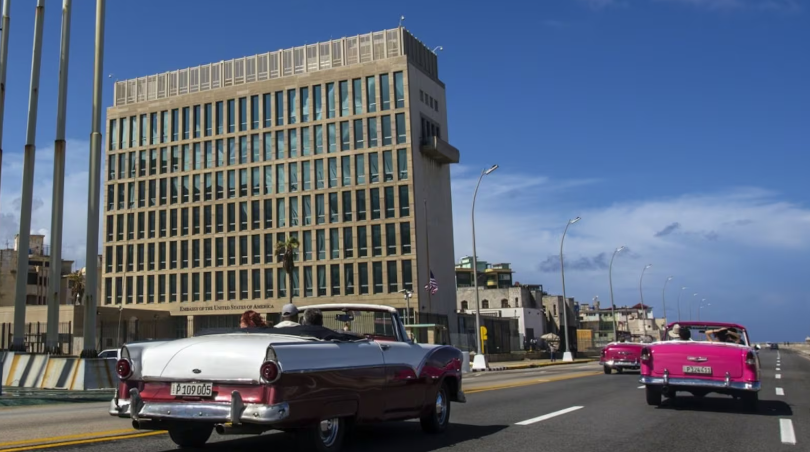
The mysterious illness first came to the surface in late 2016 after U.S. officials, who were stationed in Havana, Cuba, and their family members started reporting several symptoms, including insomnia, problems with hearing, memory loss and vertigo.
Most of the U.S. intelligence community continues to believe that it is “very unlikely” that a foreign adversary was responsible for the so-called Havana Syndrome, a U.S. intelligence report, which was released in January 2025, said.
But at least one intelligence agency said there is a “roughly even chance” a foreign actor has “used a novel weapon or prototype device to harm a small, undetermined subset of the USG personnel or dependents who reported medical symptoms or sensory phenomena as AHIs,” according to the five-page report.
Russia denied in November 2021 that it had any connection to the incidents.
