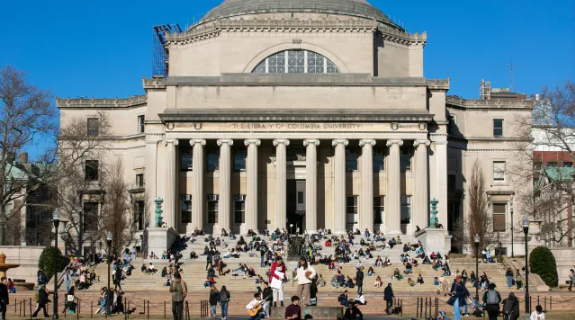
In March, the Trump administration cancelled $400 million in federal government research grants and contracts to Columbia University and threatened to block billions more.
In July, Columbia administrators agreed to pay $200 million to the federal treasury and another $21 million into an Equal Employment Opportunity Commission claims fund to settle “multiple federal agency investigations into alleged violations of federal antidiscrimination laws” and restore government funding. Columbia also made sweeping commitments regarding its admissions, hiring, disciplinary, protest, academic and student support policies, all subject to oversight by an external resolution monitor.
Many higher education experts expected the Columbia settlement to serve as a template for future agreements. But despite some common elements, the five additional settlements to date vary widely in the sums universities must pay, where those funds are directed, the constraints imposed on academic freedom and free speech, and the extent to which university autonomy is infringed.
The differences, which are considerable in sums and substance, appear to reflect the amount of federal money at risk, the notoriety of protests on each campus, the timing of settlement talks, the extent to which the administration wanted to make an example of the university, and perhaps the expertise of the negotiators.
University leaders clearly felt the cost of refusing to settle outweighed the harm done by the settlements. But that harm, while it could well have been worse, is, in our judgment, by no means inconsiderable.
For one thing, the settlements represent a form of pay-to-play. The Trump administration’s demands for $500 million from Harvard and almost $1.2 billion from the University of California, Los Angeles remain unresolved, but no other university has so far paid as much as Columbia. Northwestern, at $75 million, is the closest. Cornell and Brown paid less, with some funds directed to agricultural research and workforce development programs, while the University of Pennsylvania and the University of Virginia paid nothing.
The settlements are also weaponizing antidiscrimination law. Surprisingly, perhaps, the common thread running through every agreement is not the alleged failure by universities to curb antisemitism, the stated impetus for government intervention. It is the Trump Administration’s attempt to impose its view that diversity, equity and inclusion efforts constitute, as Vice President JD Vance put it, a “deliberate program of discrimination primarily against white men.”
The University of Virginia settlement offers the starkest example. After President Jim Ryan, a DEI supporter, was forced to resign, the university agreed to apply the Justice Department’s “Guidance for Recipients of Federal Funding Regarding Unlawful Discrimination,” which goes far beyond existing law in seeking to ban any consideration of race or gender in admissions, hiring, financial aid, and student affairs.
Northwestern agreed not to “maintain programs that promote unlawful efforts to achieve race-based outcomes, quotas, diversity targets, or similar efforts,” consider race in admissions, hiring or employment decisions, or employ any proxies for race, including, presumably, socioeconomic status.
The University of Pennsylvania was forced to bar transgender athletes from competing on women’s teams, apologize to every female swimmer affected by the past participation of a transgender athlete, and provide “locker rooms and bathrooms strictly separated on the basis of sex.” Other universities agreed to recognize only two sexes in policies relating to housing, athletics, and gender-affirming care.
The settlements also undermine academic freedom. Although most agreements insist the government will not dictate “curriculum or the content of academic speech,” some do just that.
To ensure its Middle East “educational offerings are comprehensive and balanced,” Columbia pledged to appoint new faculty members to “contribute to a robust and intellectually diverse academic environment.”
Brown promised to support “research and education about Israel, and a robust program in Jewish studies,” as well as “renewed partnerships with Israeli academics and national Jewish organizations.”
The settlements also chill freedom of speech. Several settlements mandate strict limits on student conduct and protests. Northwestern agreed to ban “protest activities” in academic spaces and “flyers, banners, chalking and 3-D installations outside of areas specifically designated.” Columbia agreed to furnish the government on request with records of disciplinary actions and arrests involving student visa-holders.
The settlements will shape future admissions. Several agreements mandate “merit-based admission policies” and require detailed reporting “showing both rejected and admitted students broken down by race, color, grade point average, and performance on standardized tests.” The Department of Education has mandated similar reporting from all institutions, presumably so it can police compliance with the administration’s much-criticized interpretation of the Supreme Court’s 2023 affirmative action decision.
Finally, these settlements directly undermine university autonomy. Northwestern may not modify its protest or harassment policies “without the consent of the assistant attorney general.” Brown must conduct annual campus climate surveys and obtain the Department of Education’s approval for new initiatives. Virginia’s president must certify under penalty of perjury the university’s “full compliance” with the administration’s guidance on unlawful discrimination, leaving the determination of progress to the government’s “sole discretion.” Columbia must place its University Judicial Board under the provost, employ at least 36 campus safety officers, and “decrease financial dependence on international student enrollment.”
These and a host of other intrusive mandates, including mandatory data sharing, will make it easier for the government to monitor core university functions and impose penalties on institutions that don’t implement the administration’s policies.
And few if any universities are likely to miss the message of these settlements. Like the execution of British Admiral John Byng “for failing to do his utmost” during the Battle of Minorca in 1756, they are designed, to quote Voltaire, “to encourage the others” to get with the program — or else.
Glenn C. Altschuler is the Thomas and Dorothy Litwin Emeritus Professor of American Studies at Cornell University. David Wippman is emeritus president of Hamilton College.
