Moderate and vulnerable Republicans are attempting a long-shot revolt against their leaders in the House over health care.
They are trying to force a vote to extend the enhanced ObamaCare subsidies that GOP leaders are declining to bring up — and that moderates warn will cost Republicans in the midterms.
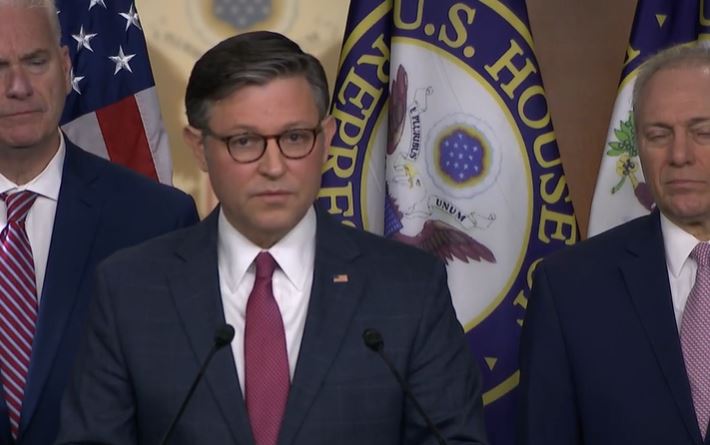
House Republican leaders said Wednesday morning they will hold a vote next week on a package of health care reforms that have broad support from GOP members. But that legislation will not include a measure to extend the expiring subsidies that many conservative Republicans fiercely oppose.
Just hours later, Rep. Brian Fitzpatrick (R-Pa.) filed a discharge petition to try to bypass leadership and force a vote on a bill to extend the enhanced subsidies for two years with new income limits and antifraud measures, similar to other plans in the House and Senate.
Fitzpatrick co-leads that bill with Democratic Reps. Jared Golden (Maine), Tom Suozzi (N.Y.), Don Davis (N.C.) and Marie Gluesenkamp Perez (Wash.), while GOP Reps. Don Bacon (Neb.), Rob Bresnahan (Pa.) and Nicole Malliotakis (N.Y.) also signed on.
“This is personal to a lot of us. These are our friends and our neighbors that are losing sleep over this,” Fitzpatrick said. “So we just have no time, no patience, for the BS politics that sometimes consumes this place. This is real life.”
To force a vote, the petition requires 218 signatures, amounting to a majority of the House — which means a significant number of Democrats would have to sign the petition to force a vote.
Sign up for the Morning Report
The latest in politics and policy. Direct to your inbox.
Email address
By signing up, I agree to the Terms of Use, have reviewed the Privacy Policy, and to receive personalized offers and communications via email, on-site notifications, and targeted advertising using my email address from The Hill, Nexstar Media Inc., and its affiliates
It’s not clear they will get that support, since House Minority Leader Hakeem Jeffries (D-N.Y.) is pushing his own petition to extend the subsidies for three years without any reforms. Golden said that he had not yet attempted to get Democratic leadership’s blessing for members of his caucus to sign the petition. The petition had 13 signatures as of late Wednesday afternoon.
Even if it reaches 218 signatures, supporters might not be able to force a vote on the matter before the subsidies expire.
Despite the signatories’ impression that they could move to force a vote within 48 hours immediately after reaching 218 signatures, a seven legislative day waiting period would apply before they could do so, unless Speaker Mike Johnson (R-La.) willingly brings it up earlier. There are only seven more legislative days scheduled before the House departs for the holidays.
Republican centrists have been imploring leadership for weeks to hold a vote to extend the subsidies. While conservatives appear intent on letting the subsidies expire and pointing fingers at Democrats, centrists warn that Americans will blame Republicans for spiking health care costs and their party’s thin majority will be lost. There are 22 million people whose monthly premiums are set to increase significantly if the subsidies expire.
Moderates say they are sympathetic to conservatives’ anti-ObamaCare position, but say there is no other choice but to hold their noses and vote for a subsidy extension.
“This is the right thing to do in the short period of time, if we have to live with the ACA in order to be able to keep people whole,” said Rep. Jeff Van Drew (R-N.J.). “I’m worried about my colleagues. I really do care about them. There’s a lot of good people who won by one, two, three or four votes. Do I think this issue is worth a couple points in an election? Yeah, I do.”
And while moderates say they have no problems with the reforms that leadership wants to bring forward — on ideas like expansions of health savings accounts, association health care plans, reforms to the pharmacy benefit manager industry and other proposals aimed at reducing health care costs — none of them will help defray the looming premium payment spike.
“We’ve been advocating for the extension of the tax credits. It seems pretty clear that leadership is going in a different direction on other reforms that still, based on what they told us, sound very positive. We wanted to make sure there was a vote on a bipartisan package of the ACA taxes,” said Rep. Ryan Mackenzie (R-Pa.), who signed the discharge petition.
Malliotakis had a similar assessment.
“Most of those things are good policy provisions that the conference supports and unites us. I still think it’s a mistake to not do something regarding an extension,” Malliotakis said. She is not sure if she will go as far as signing the discharge petition.
Bacon said that none of the proposals GOP leaders want to push next week will become law by Dec. 31, when the subsidies expire — and that the Fitzpatrick bill is a “smart temporary plan till we can do these things maybe later.”
There are a handful of competing bipartisan plans in the House to extend the subsidies. Centrists said they pushed hard for them during the morning’s conference meeting, and were encouraged by conservative Rep. Jim Jordan (R-Ohio) speaking about the political prudence of working with the moderates on a short-term extension. Jordan also warned that moderates could mount a discharge petition to force the matter, Van Drew said.
While leadership insisted there was no consensus on the subsidies, Rep. Kevin Kiley (R-Calif.) said he told leaders to put the different proposals on the floor.
“If you know people don’t like it, they can vote no. That’s the way it’s supposed to work. You put it on the floor and you vote,” Kiley said.
Later in the afternoon on the House floor, moderate Republicans gathered in a long, animated huddle with GOP leaders — first House Majority Whip Tom Emmer (R-Minn.), and then Speaker Mike Johnson (R-La.).
In addition to Fitzpatrick, Bresnahan and Mackenzie, Reps. Tom Kane (N.J.), Nick LaLota (N.Y.), Mike Lawler (N.Y.), and David Valadao (Calif.) were in that huddle, which some members later said included discussion of health care. Fitzpatrick filed the petition shortly after.
But even if they get enough Democratic support for a House vote, it’s far from certain that the measure would advance in the Senate — or that President Trump would sign it. So far, Trump is leaving the matter to congressional leaders to sort out.
One GOP lawmaker said if the House could agree on a subsidy extension plan, Trump would back it.
“The problem with this issue is in the House” and GOP leaders, the lawmaker said. “I like the Speaker, but he’s the one that drew the line in the sandbox. This is not the president. If we could come to an agreement, he will support it.”
Malliotakis said she has expressed to the White House that she would like to see them more involved in pushing for an extension of the subsidies.
“I think he [Trump] understands how critical this is, and he would like to do something, but this is obviously a difference of opinion between him and the Speaker that needs to be reconciled,” Malliotakis said.
