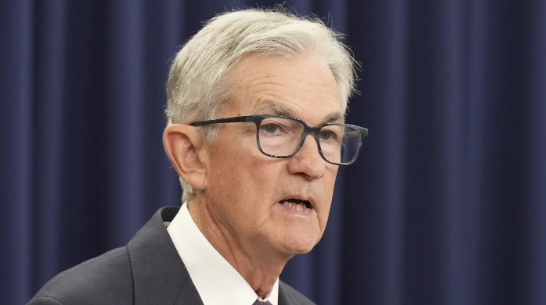
The Federal Reserve cut interest rates Wednesday for the first time this year as the central bank attempts to ease pressure on the weakening U.S. job market.
The Federal Open Market Committee (FOMC) — the panel of Fed officials responsible for setting borrowing costs — cut its baseline interest rate to a range between 4 percent and 4.25 percent, a reduction of 0.25 percentage points.
Analysts and traders widely expected the Fed to cut interest rates Wednesday after several months of alarming employment data and unprecedented pressure from President Trump, who has sought to remove members of the Fed’s board.
While Federal Reserve Chair Jerome Powell, the main subject of Trump’s pressure campaign, had previously said he was wary of cutting rates until the inflationary effect of Trump’s tariffs sorted out, the fading U.S. labor market pushed the Fed to risk its progress in the fight against rising prices.
“This is quite an unusual situation,” Powell said during a Wednesday press conference, describing the tension between the Fed’s efforts to stave off tariff-driven inflation while supporting the job market.
Powell said that while the Fed expects inflation to increase due to Trump’s tariffs, the bank is seeing the labor market take far more damage under the weight of higher import taxes and steep cuts to immigration.
“Our policy had been really skewed toward inflation for a long time. Now we see that there’s downside risk, clearly, in the labor market, so we’re moving in the direction of more neutral policy.”
Eleven of the 12 voting FOMC members supported the decision to cut rates by 0.25 percentage points Wednesday. Fed Gov. Stephen Miran, who until Tuesday served as Trump’s top White House economist, was the sole dissenter and called for a 0.5 percentage point cut.
“Even if inflation remains high … Powell seemed to be willing to give that the benefit of the doubt and, instead, focus on the risk that any incipient weakness in the labor market might gain momentum and prove harder to arrest over time,” economists at LHMeyer/Monetary Policy Analytics wrote in an analysis.
The unemployment rate has ticked higher throughout 2025 as the economy adds far fewer jobs each month than necessary to keep it stable. Steep revisions to previous employment reports also revealed the economy to be much weaker than it seemed heading into the year.
The Fed had held off on cutting rates for months as Trump’s tariffs shook the global economy and spurred prices higher. Consumer prices are up 2.9 percent over the past year as of August, according to the consumer price index, higher than before the election and well above the Fed’s 2 percent target for inflation.
The Fed also faced growing divisions among top officials, with some arguing the inflationary impact of tariffs had come and gone.
Fed Gov. Christopher Waller and Vice Chair of Supervision Michelle Bowman, two Trump additions to the Fed, both voted to cut interest rates in July, bucking other Fed colleagues. Their dissent marked the first time in more than 30 years that two Fed board members voted against the majority.
More rate cuts and division on the way In new economic projections released Wednesday, members of the FOMC projected a median of two more rate cuts before the end of the year, with annual economic growth of just 1.6 percent and an unemployment rate of 4.5 percent.
Even so, Fed officials appear to be divided about the path ahead.
Nine of the FOMC’s voting and nonvoting members suggested two more 25 basis point rate cuts this year, while six supported keeping rates unchanged for the rest of 2025. Two officials called for one rate cut, one official called for a rate hike and another called for a 1.25 percentage point reduction — equivalent to five of Wednesday’s cuts.
Several other Fed officials said before the meeting they remain concerned that the Fed’s rate cuts could fuel higher prices caused by tariffs, even as the job market weakens.
“Several members have said they are unsure how they will vote and that they still worry about the risk the tariffs will have a lasting impact on inflation,” wrote Samuel Tombs and Oliver Allen of Pantheon Macroeconomics in a Tuesday preview of the FOMC meeting, citing recent inflation data showing price growth stalling.
Powell downplayed the division among Fed members, saying it was a natural and healthy result of the bank facing another unprecedented challenge.
