Rising power prices are becoming a political liability for Republicans as electricity costs outpace inflation.
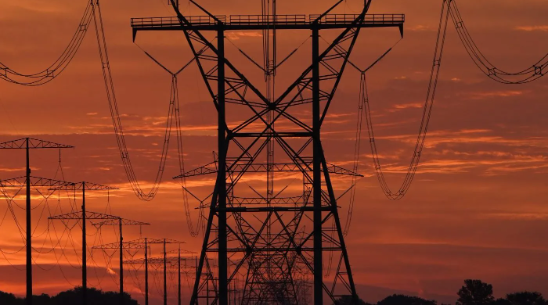
A recent Consumer Price Index report found electricity prices were rising at double the rate of inflation, having increased 5.5 percent over the past year.
“In the last couple of years, different items that have gone up in price have become media concerns. They become very visible, people get very angry — and I think electric rates are heading in that direction,” said Mark Wolfe, executive director of the National Energy Assistance Directors’ Association.
Wolfe said that if rates continue to rise, “it’ll become a political issue.”
The Trump administration is already seeing it as one — and trying to put the blame on Democrats and renewable energy.
“That is a key challenge for us,” Energy Secretary Chris Wright told Fox Business Network’s “Mornings with Maria” when asked about utility bills last week.
“Things move slowly in the electricity grid. All sorts of crazy projects were under construction and being built on your electricity grids over the last four years,” he said.
Wright, in a recent interview with Politico, similarly blamed “the momentum of the Obama-Biden policies.”
However, he lamented, “We’re going to get blamed, because we’re in office.”
President Trump has taken a similar tack, decrying “ridiculous, corrupt politician approved ‘’windmills.’”
Meanwhile, Democrats are beginning to weaponize the issue against Republicans, especially after they repealed subsidies for wind and solar energy.
Experts say a buildout of renewables would help bring down prices, but the impacts of Trump’s moves are not being felt yet.
“Residential retail electricity prices are set with basically a lag,” Massachusetts Institute of Technology professor Christopher Knittel recently told. “Trump’s effects on the rate changes won’t take place until after the midterms.”
But some also note some of this administration’s policies, including those that attack renewable energy, are expected to exacerbate the issue in the future.
“It’s less power capacity being built, and then that means that there’s gonna be less supply of power and the same demand, so prices will be higher,” Thomas Rowlands-Rees, head of North America Research at BloombergNEF, said when asked about the repeal of renewable energy tax credits.
