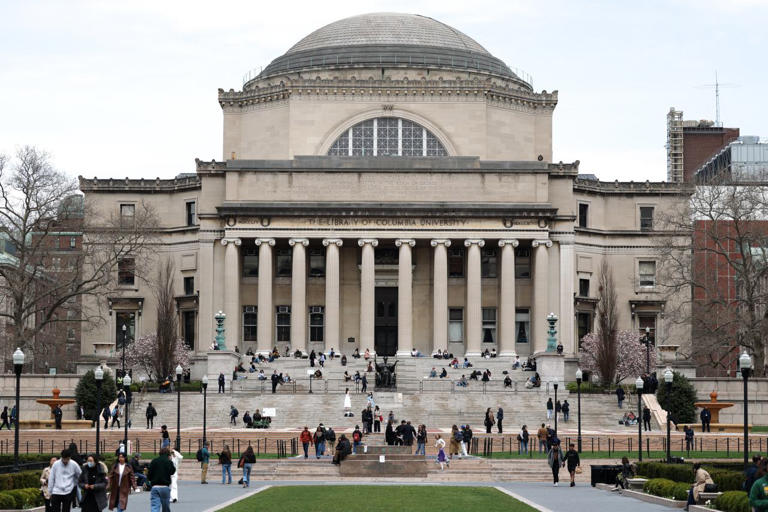
The Trump administration has presented Columbia University with a proposal for a consent decree, a form of federal oversight that would give a judge responsibility for ensuring Columbia complies with the agreement, according to people familiar with the matter.
Columbia leaders are negotiating with the government and weighing what to do, the people said. The university’s board is undecided on whether to accept a consent decree, they said. For a consent decree to take effect, Columbia would have to agree to enter it.
The government has told the school that it can either negotiate and accept a consent decree, or face a court battle that could end up with the school facing more public scrutiny and in the end the same kind of legal agreement to make changes, perhaps with worse terms, they said.
With a consent decree, the government is seeking viewpoint diversity among Columbia’s faculty and that the school not consider race in admissions, the people said.
Columbia was thrust into a battle with the Trump administration in March, when the government canceled $400 million in federal grants and contracts over concerns about campus antisemitism. The school agreed to an initial list of demands, and is now in further talks about the future of its federal funding.
The negotiations at Columbia are part of a broader fight between the Trump administration and elite universities. The White House is also fighting Harvard University over federal funding, among other things.
A Columbia spokesperson said: “This story is based entirely on hearsay and does not hold merit.” She pointed to a statement issued last month from acting university president Claire Shipman, who said that Columbia would reject any agreement that would require relinquishing its independence.
A consent decree would be a major escalation of how the federal government normally resolves education-related civil-rights issues. Typically after federal lawyers investigate and find evidence that civil rights were violated, schools enter voluntary agreements to change their practices. The federal government has little ability to enforce such agreements. The Biden administration entered into such voluntary agreements over antisemitism concerns with Brown University and Rutgers.
Columbia could fight the move in court; the Justice Department would need to prove that the arrangement is warranted. But a court case could take years, and Columbia would likely lose federal funding in the interim—and might ultimately lose. Opposing the move would also open the school up to required depositions and legal fact-finding, which could keep the school’s campus politics in the spotlight.
Typically a consent decree involves a legally binding agreement, with compliance overseen by a judge. In the past, the government has implemented consent decrees in instances such as the Live Nation merger, where the newly formed company agreed to certain restrictions. Such decrees were used heavily during the Obama administration to negotiate with cities for changes to their police departments.
